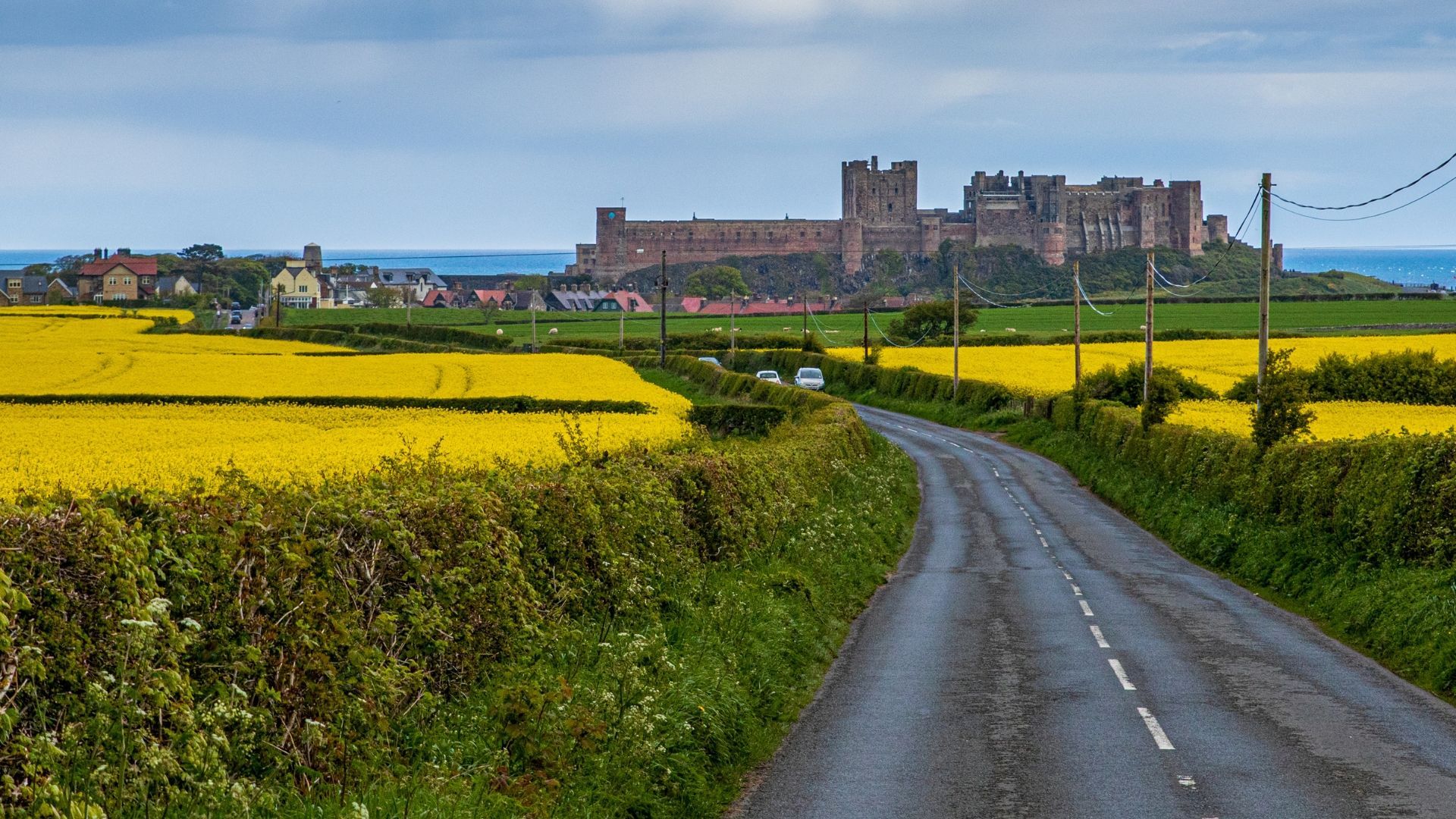
Hadrian's Wall road trip guide: walks, transport and places to stay
Looking to explore Hadrian's Wall, but don't know where to start? Explore routes and travel options in our handy guide.

Hadrian's Wall is as British as tea and crumpets. Built by the Roman emperor Hadrian in the second century AD, it's an 84-mile coast-to-coast defensive fortification that runs across the north of England.
The wall was built as a border between Hadrian's Britannia and the unconquered land of Caledonia to the north. It took six years and some 15,000 men to build.
Today, much of the wall is still intact. The structure as a whole was designated as a UNESCO World Heritage Site in 1987.
It's a historical marvel that offers a glimpse into our Roman past. It's also a great place to walk, taking in a wide range of views, landscapes, castles and more.
Like many of the UK's best walking trails, Hadrian's Wall can be split into sections to suit your ability and other requirements. Multiple-day itineraries exist, but there's nothing stopping you from spending a day on the trail.
If you do choose to explore Hadrian's Wall, you'll probably need transport. The wall is well-connected by air, rail and road. Here at MVH Rental, we provide drivers with rental vehicles that get them where they need to be at affordable rates.
But before we talk about that, let's look at what you can expect from a trip to Hadrian's Wall.
Walks, forts and nature: what Hadrian's Wall has to offer
The great thing about Hadrian's Wall is that its 84-mile route can be split into a multitude of walks and mileages.
Some holiday providers plan itineraries for you. Celtic Trails Walking Holidays, for example, offers five-, six- and 10-day itineraries, while Absolute Escapes offers itineraries ranging from five to eight days.
You don't need to go with a walking holiday provider, however. Routes can be found in books, on websites and on apps such as AllTrails.
Broadly speaking, Hadrian's Wall is a very well-trodden path, making it a walking destination of easy to moderate difficulty.

There are some steep sections – between Sewingshields Crags and Greenhead, for instance. Walking poles can be useful for these sections.
Taken as a whole, the Hadrian's Wall walking route is varied and glorious. For many, the highlight is the section from Chollerford to Birdoswald, falling mostly within the Northumberland National Park. But there are plenty of other highlights to be had with historical sites, hilly crags and rolling countryside scattered hither and yon.
Forts and more
If it's history you're after, you'll be pleased to know there are plenty of forts along the way. These include Housesteads, Birdoswald, Segedunum (at modern-day Wallsend), and the bathhouse at Chesters. There are milecastles, turrets and fortlets along the route, including Black Carts Turret and Cawfields Milecastle.
At
Carrawburgh, walkers can visit a Roman fort that housed about 500 soldiers. These men were brought by the emperor from colonies in present-day France and Belgium.
Nearby, there's a fascinating temple to the god Mithras built by the soldiers. When not defending Britannia against the Caledonians, soldiers would come and worship here.
Then there's Vindolanda. This is a fort just south of the main wall. Excavations are ongoing, and the site is famous for the Vindolanda Tablets – a collection of more than 1,800 postcard-sized, ink-on-wood documents discovered on the site.
Natural sights
Yes, Hadrian's Wall is inextricably tied to Britain's Roman history. But the walking trail also takes in a stunning smorgasbord of natural sights. These range from the Whin Sill escarpment on steep volcanic cliffs to the flat, peaceful views of the sea from the Solway Coast.
Recent history
History, of course, isn't over, with Hadrian's Wall making the news several times in recent years.
In October 2025, a new section of the wall was uncovered on the Solway Coast near Drumburgh. Just a few months later, another new section was found in Newcastle-upon-Tyne. In the same month, swords and shoes were uncovered at Vindolanda.

The news hasn't all been good. In September 2023, the world-famous tree at Sycamore Gap was felled by two men. This 200-year-old tree was an iconic feature of the landscape, standing proud and tall in a dip. The two men responsible for felling the tree were sentenced in July 2025.
When's the best time to visit Hadrian's Wall?
If you're planning a road trip to Hadrian's Wall, you may be wondering when the best time is to go.
The happy fact of the matter is that Hadrian's Wall is a great destination all year round. The main considerations are:
- What you want to see
- Your tolerance for crowds
- The number of daylight hours you think are best for your trip
In spring, the route is full of wildflowers and gambolling lambs. In summer, things get busy, with thousands of visitors attempting the route. And in autumn and winter, the days shorten, meaning no less beauty but a little less time to experience it.
Whatever time of year you visit, chances are you'll need transport to get there. Luckily, there are plenty of options to choose from.
How to get there
Are you beginning your road trip at Wallsend? There are plenty of international connections from Newcastle Airport and regular train services from Edinburgh and London.
If you finish your walk at Bowness-on-Solway, you can take a local bus or taxi to Carlisle, around 15 miles away. The railway station at Carlisle offers regular connections to Glasgow and London.
Alternatively, you can hire a car, minibus or van for the day. This is a flexible, affordable option that gives you all the benefits of car ownership without the ongoing costs. It also means you can try out a vehicle that's perhaps beyond your budget.
And if you're looking for vehicle hire in the North East of England, we can help. Get in touch with MVH Rental online or call 0191 4888 700 for a quick, competitive quote. We'll have you behind the wheel in no time.